NRF Lite Course
Integrating Nervous System-Informed Pathways to Healing Stress and Growing Resilience in Children and Families
Offered January to May 2027
Many practitioners who support families may feel overwhelmed when facing challenges that can’t be addressed by conventional solutions. The NeuroRelational Framework (NRF) Lite course provides you with a powerful framework that effectively addresses the nervous system, helping you create customized care plans through a relationship-based approach.
- Training: Three 3-hour live Zoom training sessions (9 hrs total), and three 1-hour pre-training videos before each live Zoom session; in addition, three 1-hour “Skills & Support Hour” sessions with faculty members. You’ll also have access to 30+ digital handouts and tools (accessible throughout the program).
- Online Portal: All materials in one place, including access to discussion boards.
- Continuing Education: Upon completion of all 12 training hours, you are eligible for 12 hours toward ESIT certification credits and/or 12 clock hours for educators. Skills and Support Hours are not eligible for continuing education. This program can be applied to the requirements for Washington’s Infant/Early Childhood Mental Health Endorsement (I/ECMH-E®).
- NRF Level 1 Foundations Knowledge Certificate: Completing all 15 hours is required as part of the 25 total hours for this certificate.
Interested in taking the NRF Lite Course? Register here.

Skills you’ll gain (and more!):
- Interpret child behavior through a Safety–Challenge–Threat lens: Learn an alternative to the typical compliance/noncompliance approach through nervous system-informed care.
- Recognize observable indicators for patterns of regulation, stress, safety, challenge, or threat: Track the connections between sleep quality and daytime biomarkers, relational engagement, and stress patterns that may help inform how a child is experiencing and managing everyday routines.
- Identify possible stress triggers and match supports to the child’s observed needs: Build skills to recognize what may be increasing threat or reducing capacity in a child’s life, then select supports that reduce threat, increase safety, support challenge, and strengthen participation.
- Support caregiver-child co-regulation and relational safety: Learn to strengthen warm, responsive interactions by supporting shared joy, sensory comfort, back-and-forth communication, rupture and repair, and caregiver cue-reading.
- Coordinate holistic, strategic support for the child across routines, settings, and systems: You’ll practice thinking through which supports should come first, who to involve, and how to reduce fragmented care across home, community, service providers, and transitions.
To get a better sense of our training and materials, check out our Free Starter Kit.
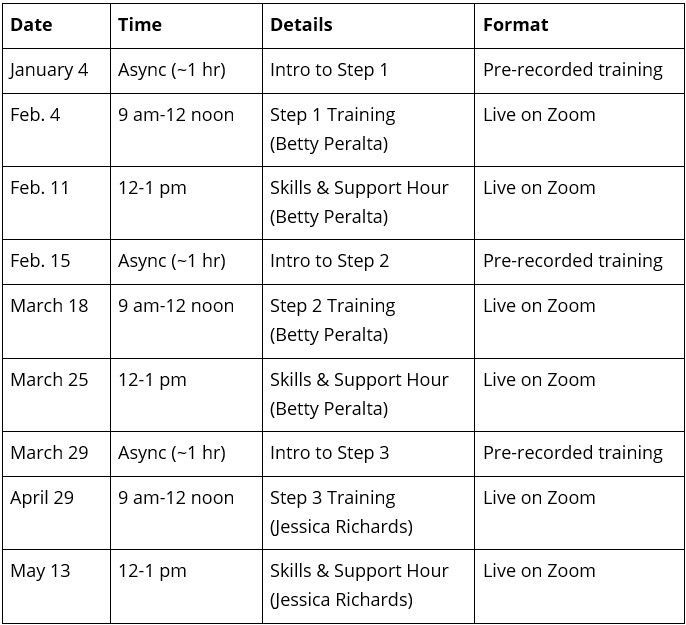
Course Dates
What is the NeuroRelational Framework?
We are clinical experts AND parents of neurodivergent children, blending our research and knowledge with personal experience, with backgrounds in psychology, nervous system-informed therapy, neurology, and psychiatry. You can learn more about our team here.
For more than 15 years, we’ve trained clinicians and professionals in Canada, Wisconsin, California, Alaska, and Washington on how to help families navigate complexities and the challenges that come with raising a child with a sensitive and vulnerable nervous system.
We’re excited that this is our 5th year providing training to ESIT providers.
Read more about the NeuroRelational Framework here
FAQs
Is it self-paced or cohort-based?
What is the total time commitment?
- Three 1-hour pre-recorded trainings
- Three 3-hour live Zoom sessions
- Three 1-hour “Skills & Support Hour” Zoom sessions with faculty members.
How much does this cost?
Can I enroll my whole team in this course?
Interested in taking the NRF Lite Course? Register here.
Join our Mailing list